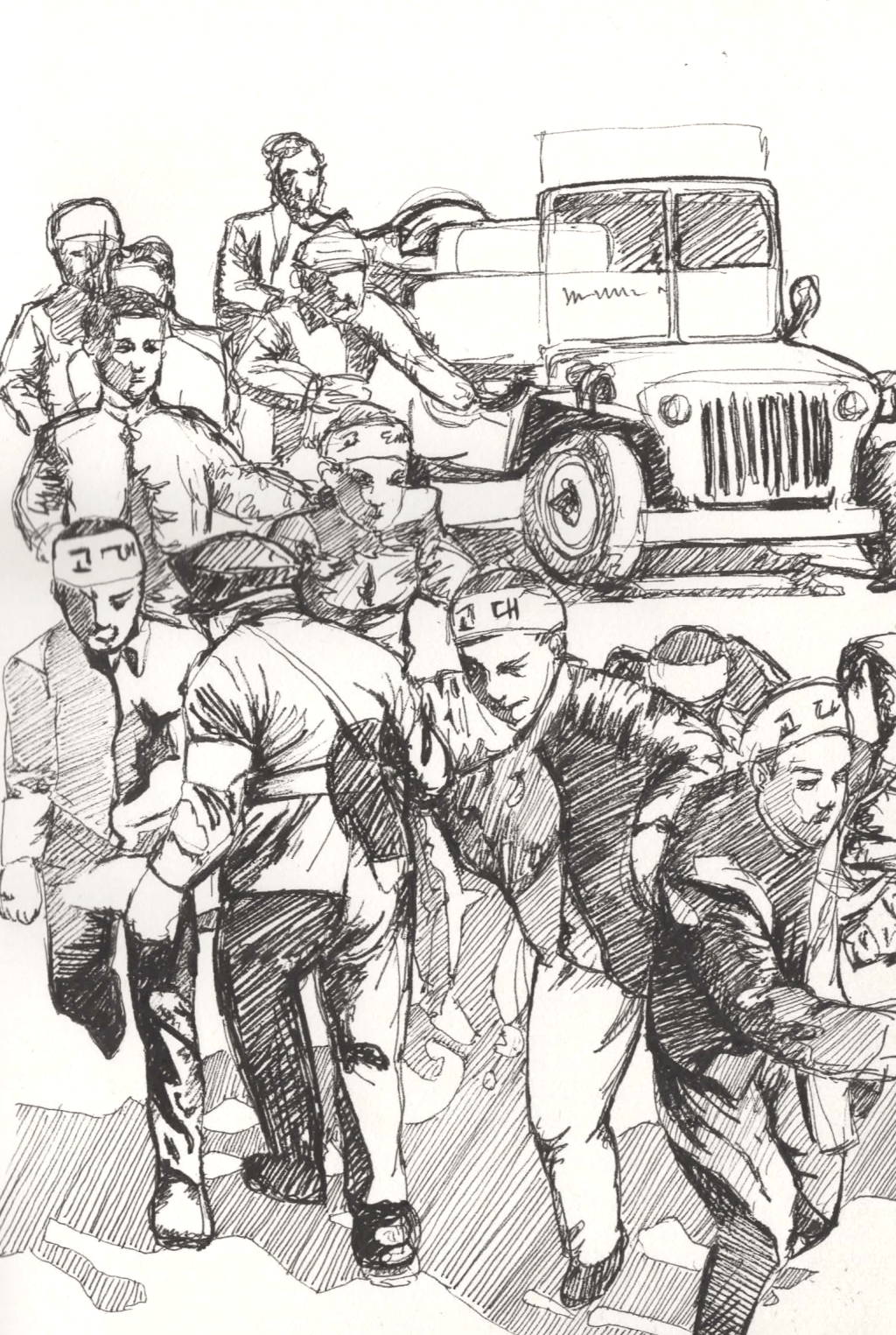
How hard was it to gain democracy?
19th April was a significant incident that happened as known in Korea’s modern history. After the Japanese colonial period and the Korean War, students all around the country had a revolution against election fraud due to the greed of the dictatorship by the first president of the Republic of Korea, Syngman Rhee. At that time, Korea was rapidly developing into an urban community after the Korean War and also a growth of education about democracy among civilians. As a result, the election happened based on democracy. However, Syngman Rhee and the Liberal Party committed fraud in the 1958 National Assembly and the 1960 presidential elections to maintain their power using the police and civil servants. In early April, to protest against the fraud, the students came onto the streets to make their voices out. This revolution started with students and civilians joining this movement. President Rhee alleged that this movement was an agitation by communists, but the revolution did not slow down. As a result, first, the cabinet took responsibility and stepped down. And after Syngman Rhee also announced his resignation on 26th April, the revolution ended.
This revolution was meaningful as it drove out dictator Rhee; however, in the end, it led to a military coup by Junghee Park due to political chaos. As a result, it is hard to say that a successful revolution. In modern Korean history, there were a lot of fights between people who kept the democratic spirit and some in power who were against legalism for their desires. We bled a lot and had a lot of scars, but in the end, it made our belief more solid. We can see the effort of several decades from what happened on 6th December last year, when the martial law by former president Yoon was lifted only 2 hours after announcing.
This current incident has a lot of similarities and also many differences with the 4.19 revolution. The supporters of Yoon were branding citizens who were calling for impeachment as communists, and the dictator was punished through revolution by the citizens. Of course, there was a difference that the election fraud happened in 1960; on the other hand, there was a legitimate election in the current time after many election frauds throughout history, and not fraud: only a conspiracy theory of election fraud instigated by Yoon’s supporters. The fact is, we made a lot of progress until this peaceful revolution. In April 2025, the impeachment of President Yoon was not simply the result of the current citizens’ achievement but the result of all those people who sacrificed for Korean democracy in the past. Still, the remnants of treason are disrupting the state affairs for survival, but I believe that the people of the Republic of Korea, who protected democracy built on the past, will get through this. Han Kang, the author of ‘Human Act’, the story of the Gwangju Democratic Uprising, said, “The past revives the present.’ And I dare to believe that we, as present, will become the fertiliser for building a better future for Korea.
 daydreamland.blog
Leave a comment